These same money changers were associated with others who engaged in shady business practices in the temple courts. Some sold sacrificial animals, overcharging people who did not bring their own. Others were in charge of examining the animals to be sacrificed, and it was a simple matter to declare an animal “unapproved” and force the worshiper to buy another animal—at an inflated price—from the temple vendors. Such goings-on, exploiting the poor and the foreigner, angered the Lord Jesus and was strictly forbidden in the Mosaic Law (Exodus 22:21; Leviticus 19:34).
Current uncertainty and worries are clearly reflected in the financial markets. Investors are fleeing into assets that are deemed safe such as gold, U.S. Treasuries and the dollar. They still flock to the U.S. on a massive scale whereas a lot of the current insecurity derives directly from the White House. At the same time, we are seeing more and more commentaries around the question of whether a shift is taking place, slowly but surely, from the dollar toward other currencies.
JP Morgan recently wrote, “We believe the dollar could lose its status as the world’s dominant currency (which could see it depreciate over the medium term) due to structural reasons as well as cyclical impediments.”
And this month, Bank of England Governor Mark Carney claimed that the dollar’s status as a hegemon is putting the global economy under increasing strain and needs to end.
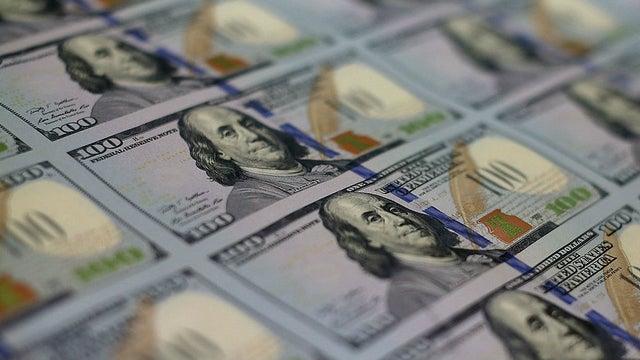
That the dominance of the dollar is being questioned is not surprising at the present juncture:
Current and future U.S. policies look vague or non-existent. Allies as well as enemies feel out of control as they have to wait and see what storms are brewing in the U.S. president’s Twitter feed, about to be unleashed.
Countries such as China and Russia are taking an increasingly assertive stance.
The relative supremacy of the U.S. has been waning and there are mounting doubts whether the country will continue to support and shore up the international system that it has largely build up and shaped itself.
The power of the United States may be lessening in a relative sense but the country has its tentacles in projects and countries virtually all over the world.
Owing to the role of U.S. financial institutions, authorities and the dollar in SWIFT (the international payment system) non-U.S. businesses are terrified that they will incur billions of dollars in fines.They worry that this will happen as soon as there is even a tiny shred of evidence that can connect them to a country or corporation hit by sanctions from Washington. Therefore, many states are looking for ways to become less reliant on the dollar and the U.S. in general.
America really started to move toward hegemony just before the end and after World War II when the Allied nations set up the Bretton Woods system. Subsequently, the U.S. managed to further amass the financial-economic, political, and military power that allows it to leave a structural and sweeping mark on the world.
At the same time, Americans have been criticized for being overbearing. As early as the 1960s, the then French president de Gaulle irritably said it was an exorbitant privilege for the Americans that the dollar was the global reserve currency. Attempts have been made from time to time to weaken the dominance of the dollar; mostly without much success.
Nevertheless, things are shifting in a way that seems to suggest that countries want to become less dependent on the dollar. Whereas China owned 14 percent of U.S. government paper in 2011 that percentage has dropped to seven by now. Viewed from a broader perspective, it is clear that the dollar reserves at other central banks have started to play a slightly less prominent role.
Some 70 percent of the currency reserves of central banks consisted of dollars around the year 2000 whereas this share is currently 60 percent. We are also seeing political initiatives by countries trying to keep away from the clutches of the U.S. financial system and the dollar.
Europe wants to continue to trade with Iran via the so-called INSTAX instrument as parties try to bypass the U.S. sanction regime. And there are more and more initiatives that are intended to ensure that countries can trade in their domestic currencies instead of using the dollar. For instance in the context of energy trading between China and Russia.
However, specifically the buying and selling of oil and other energy sources show how “sticky” the U.S. hegemony still is. Eighty percent of global oil trades are paid in dollars. And there are other sobering data:
1. The dollar is used by counter parties in 80 to 90 percent of all currency transactions.
2. The dollar comprises 62 percent of the global currency reserves whereas the euro is in second places with a meagre 20 percent.
3. Sixty percent of international outstanding debt is priced in dollars.
Another concrete example: Brazil and India are paying 80 percent of their imports in dollars whereas just a fraction of the imports hails from the U.S. itself.
History shows that an incumbent power can hold on to certain privileges and power sources for a very long time even after a marked decline. America had a larger economy than the United Kingdom as early as 1870 but the pound continued to be the world’s most important currency for decades afterward.
The dollar will not be replaced as the global currency any time soon. At the same time, the tentative measures that countries are taking to reduce their dependency on the dollar show they are anticipating a post-America era is in the making. This trend is bound to strengthen now that the U.S. is regarded as an increasingly fickle opponent and unpredictable ally. Business Finance Source
StevieRay Hansen
Editor, Bankster Crime
MY MISSION IS NOT TO CONVINCE YOU, ONLY TO INFORM…
#Fraud #Banks #Money #Corruption #Bankers,#Powerful Politicians, #Businessmen






HNewsWire Talk Radio
HNewsWire Talk Radio HNewsWire Talk Radio is a platform or show that discusses current events, news, and controversial issues from an independent or alternative media…
Read More about HNewsWire Talk Radio