BY SRH
On Thursday, Peter joined host Danny on CapitalCosm to unpack the deepening cracks in the US debt market and what they mean for the dollar, oil, and the political landscape heading into 2026. He walks through weak Treasury demand, the fragile yen carry trade, and why “growing our way out of debt” remains a fantasy, before turning to how inflation is set to reshape the midterms and why the next Fed chair will likely follow the same inflationary playbook as his predecessors.
Peter starts with a recent Treasury auction that barely registered a ripple in the bond market, even though it revealed just how little appetite exists for US government debt. He explains that today’s yields simply don’t compensate investors for inflation risk over the long haul:
But the bottom line is, I mean, $6 billion is nothing. There’s so much debt out there that nobody wants because the yields are not high enough to offset what you’re gonna lose to inflation over the course of the maturity of these 10 year to 30 year US Treasuries. I mean, I know that 4.85, maybe that sounds like a high rate based on what we’ve had since the 2008 financial crisis. But prior to that crisis, this was not a high rate. And rates should be much higher now than they were pre 2008 because back then we had a fraction of the debt that we have now.
From there, Peter turns to Japan, where the yen’s volatility threatens to upend one of the world’s most important funding trades. He describes a dangerous feedback loop where currency moves in either direction could trigger a wave of Treasury selling:
Because if the yen keeps falling, that puts more pressure on Japan to sell treasuries to buy yen. So, best it is hoping that the yen rises so that the Japanese don’t have to sell those treasuries. But if the yen keeps rising, that blows up the yen carry trade. And then a lot of other owners of US Treasuries are gonna be selling. And owners of other US dollar assets that were purchased with the borrowed yen that they’re gonna be repaying if they’re getting hit by a stronger yen.
Zooming out from the mechanics of the bond market, Peter addresses the political fantasy that America can simply expand its way out of its debt burden. He notes that this promise has been recycled for decades without ever coming true, and that Washington’s newest hope rests on artificial intelligence delivering an economic miracle:
Politically, there’s no viable way out of this other than to grow our way out. And the problem is they’ve been talking about growing our way out of the debt for 40 or 50 years. This is not new and we haven’t done it. The problem keeps getting bigger and bigger because the debt grows faster than the economy. Now, they’re hoping for a miracle with AI – that maybe AI is a game changer and we may grow the economy faster than the debt.
Peter then shifts to the political fallout of rising prices, arguing that inflation will flip the script for the 2026 midterms. Where Democrats bore the blame for the cost of living crisis in 2024, he expects Republicans to take the hit this time around:
In 2024, it was Biden and the Democrats, so that was easy for the Republicans. But the Republicans now own the economy, and they own the prices, especially when the Democrats can point to the tariffs, can point to the Iran war, right, as other factors that are contributing to the cost of living crisis, and that would be accurate.
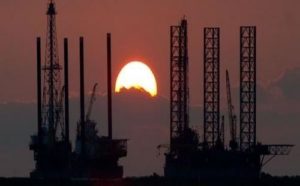
Turning to commodities, Peter predicts that a weakening dollar will send energy prices sharply higher in the years ahead. He points to past oil spikes as a benchmark for where prices could realistically head next:
I think oil prices are headed higher, especially when the dollar really starts to tank, which it will. And so I think oil got to $140 a barrel in 2011. It was $100 a barrel in 2008. We’re still significantly below that. I think we’re gonna hit $200 a barrel on the price of oil in the next few years.
Peter closes by addressing speculation over the next Federal Reserve chair, arguing that regardless of who takes the job, the incentives always point toward the same outcome. He explains why inflation isn’t an accident but a deliberate policy choice that every Fed chair, present and future, keeps making:
He said inflation is a choice, absolutely. All the Fed, all the former Fed chairs from Greenspan have chosen inflation. And Warsh is gonna make the same choice for the exact same reasons. Because the alternative is political suicide. They won’t do it. Because it means we have to bite the bullet and pay the piper. Source: ZeroHedge