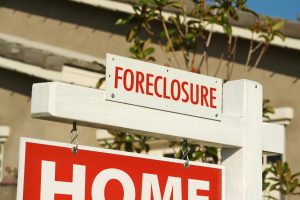
As high mortgage rates and high monthly payments squeezed American homeowners, foreclosure filings rose 10% in July. ATTOM data shows about 40,000 houses entered foreclosure throughout the month.
July foreclosure filings rose 1% from June and 10% from July 2025 to 39,906 homes. One foreclosure filing every 3,603 homes nationwide.
“The increase in foreclosure starts and completed foreclosures compared to last year shows that financial pressures remain for some homeowners,” ATTOM CEO Rob Barber said. Foreclosure filings rose 21% in the first half of 2026 compared to last year. Foreclosures rise nationwide Nevada had the highest July foreclosure rate, followed by South Carolina, Florida, Delaware, and Texas.
With one foreclosure filing every 899 housing units, Punta Gorda, Florida, has the highest rate among metropolitan areas with at least 200,000 residents. The five highest-rate urban regions were Killeen, Texas; Las Vegas, Nevada; Vallejo, California; and Lakeland, Florida. Compared to July 2025, national foreclosure starts and completions rose. ATTOM warned that the numbers are far below prior housing crises.
“However, the broader context is important,” Barber said. By historical standards, foreclosure activity is modest. “While annual increases are more common, current volumes indicate that the market remains relatively resilient.” However, other data suggests financial pressure is rising, particularly among Americans who bought houses amid high mortgage rates.
Half of recent buyers say mortgages could become unsustainable. Freddie Mac data shows that the average 30-year fixed mortgage rate has been above 6% since September 2022, except for February. Millions of Americans bought homes at greater borrowing rates than during the ultra-low-rate era. Truework revealed in July that many of those buyers now rely on refinancing for long-term financial stability. The organization surveyed 1,000 Americans who bought houses in the past two years.
85% of mortgage holders felt refinancing within three years was crucial to their financial health. That was 56% in Truework’s 2025 survey.Even more shocking, half stated their mortgages would become unsustainable if interest rates don’t reduce.A further 40% would need to work two jobs if they couldn’t refinance within three years.Nine in ten stated a typical financial setback could affect their home payment.
Truework called it “Conditional Affordability.”“A payment that works today, but only through continued financial sacrifice, and long-term finances that depend, at least in part, on a future rate drop,” the business added.Many buyers could afford the house when they signed the mortgage, but they assumed expensive financing would get cheaper.That calculation becomes harder if rates stay high.
Another issue for struggling homeowners: a slowing market Sell the property may not be easy for financially strapped homeowners.According to Redfin’s Aug. 27 study, rising mortgage rates and housing prices are deterring purchasers.Some purchasers wait for mortgage rates to drop before buying, while others are hesitant due to economic uncertainties.Weakening demand offers buyers more negotiation leverage and makes it tougher for sellers to match neighboring pricing.“Sellers should resist the urge to price based on what a neighbor got a year or two ago,” Chen Zhao, Redfin economy research head, said.
A home’s initial price can determine whether it attracts a serious buyer or sits on the market.Housing buyers from the high-rate era face a significant difficulty.Mortgage payments are high, many recent buyers are hoping rates will drop enough to refinance, and sluggish demand could make selling harder.Foreclosures are modest compared to the 2008 financial crisis housing catastrophe.
The direction is becoming harder to ignore.Foreclosure filings rose 21% in the first half of the year and 10% in July, and half of recently surveyed mortgage borrowers said their payments could become unsustainable without reduced rates.The longer rates stay high, the more financially pressure homeowners who bought expecting cheaper money face.