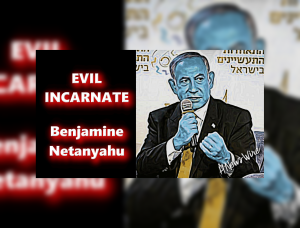
BY SRH
Update:
Eisenkot: I will do my utmost to form a Zionist government, with national service for all; Netanyahu should step down
Update;
Likud claims election ‘stolen’ by Arab parties, demands investigation into alleged fraud
Netanyahu-led bloc expected to win 53 seats, Eisenkot-led bloc at 48, Arab parties at 19; 61 needed for majority; Herzog calls for ‘open mind’ in coalition talks * Up to 480,000 ballots from troops, cops, diplomats still to be tallied * Joint List chief ‘ready to pave way’ to oust government * Report: Opposition seeks to replace Likud’s Ohana as Knesset speaker with Arab parties’ backing
Update:Yair Golan, head of the left-wing Democrats, said on X that his faction is “ready to work with all our partners” to form a government. His post did not mention the Arab parties, but during the campaign, Golan repeatedly said the Democrats would be willing to partner with Ra’am.
“The public has spoken, it has fired the Netanyahu government,” Golan wrote on X, saying this was “a historic opportunity to establish a government of change in Israel, and we don’t intend to give it up.”
Update:
- No Clear Victor: Likud leads with neither side near the 61-seat majority needed to govern.
- Record Voter Turnout: Participation hit 66.7% by 6 p.m., fueled partly by strong Arab-Israeli turnout that could hurt Netanyahu.
- Likud sought extended voting hours, was rejected: Netanyahu signaled election fraud before final results were available.
- Arab Parties Hold Some Key Leverage: Projected to win 17–18 seats, Arab-led parties could influence coalition formation, though opposition divisions may prolong political gridlock.
Yes 53% · No 47%
View full market & trade on Polymarket
Deadlocked: Exit Polls Show Netanyahu Block Slight Edge

Vote Close with Lack of Clear Victor: Exit polls show Anti-Netanyahu bloc leads, Likud biggest party
Like with prior recent big legislative elections, we could witness months of coming gridlock over who is crowned the ruling coalition – and prime minister. So far, amid initial exit polls published, no clear winner is emerging, but it’s clear that Netanyahu’s Likud party is doing better than expected, and is in the lead in terms of single party votes.
Updated exit polls show Netanyahu bloc ahead or level with anti-Netanyahu bloc, Likud as biggest party; no clear path to majority for either side * Arab parties, hostile to Netanyahu, projected to win a record 18-19 seats
The rhetoric echoes a familiar campaign tactic employed by Prime Minister Benjamin Netanyahu and his political allies, who have repeatedly sought to mobilize right-wing voters by stoking fears of Arab voter turnout and the prospect of a left-wing government supported by Arab parties.
Deri earlier this month declared that Shas will not join or support the next government unless it passes legislation preserving sweeping military service exemptions for Haredi yeshiva students.
The declaration follows a similar ultimatum from United Torah Judaism, the other major Haredi party, with which Shas signed a surplus-vote agreement ahead of today’s election.
During the evening of October 27, the counting of votes in Israel’s national election began, and exit polls conducted by Israeli media sources revealed that there was no obvious winner in a contest that involved multiple parties.
The Likud Party, which is led by Israeli Prime Minister Benjamin Netanyahu, was forecast to gain 24 seats, which is the most seats of any single party, according to early exit polling conducted by Israel’s Channel 12 television station. The same exit polls also revealed that a coalition of opposition parties is expected to gain approximately 52 seats collectively. This puts the opposition bloc in a leading position in the competition to establish a governing majority of at least 61 seats in Israel’s Knesset, which is comprised of 120 members.
It is anticipated that the final count of ballots will not be completed until the 30th of October, following which it will be announced on the 4th of November.
Netanyahu claims right-wing bloc won ‘decisive majority’ among Zionist public, plans to form ‘right-wing government’; Eisenkot had urged him to accept defeat and step down
We sat together, eyes fixed on the screen as the election results rolled in. Once again, the news anchor announced, “Still too close to call.” It wasn’t just this country—across the globe, every headline seemed to echo the same suspense, the same razor-thin margins.
We reached out to friends and family living in distant places, only to hear similar tales. “Our election ended with a split so narrow, it could have gone either way,” a cousin messaged from halfway around the world.
It struck us how, regardless of country or culture, people everywhere seemed evenly divided—each group passionately holding to their hopes, their fears, their vision for the future.
The closeness of these elections felt like more than just numbers. They were a sign of societies searching together for answers, wrestling with change, and longing to be heard. Though opinions differed, deep down we wondered if we all simply wanted the same things: to belong, to be understood, and to make a difference—even if we often disagreed on how best to achieve it.