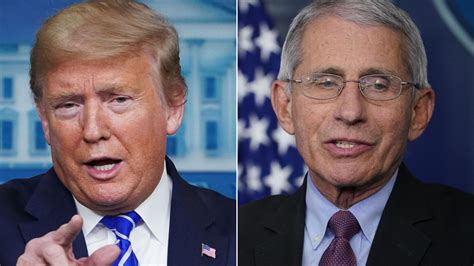
The small man is finished.
Anthony Fauci, a lifelong public health officer whose judgments during the pandemic changed millions of Americans’ daily lives, may now face serious repercussions when Sen. Rand Paul set the date for a committee vote.
The Senate Homeland Security and Governmental Affairs Committee will vote on a resolution accusing Fauci of contempt of Congress on Thursday, following his refusal to respond to subpoenaed questions during the hearing last week.
Paul, the panel’s Republican chairman from Kentucky, made the announcement today. As required under the subpoena, the resolution gives the Senate President permission to certify the committee’s findings about Fauci’s reluctance to respond to questions relevant to the investigation.
Paul outlined the steps in a statement: “Dr. Fauci arrived under subpoena and cited the Fifth Amendment to refuse answering questions. I decided at the hearing that Fauci had lost any residual privilege by providing opening testimony and that the Fifth Amendment did not apply due to the pardon. Despite my warnings about disdain and my orders for him to respond, he refused. That is interfering with a congressional inquiry. The Committee will take appropriate action.
Fauci was subpoenaed in July to provide testimony about the committee’s inquiry into “risky life sciences research and the origins of the COVID-19 virus.” On July 29, Fauci appeared, made an opening remark, and then invoked the Fifth Amendment to reject all serious questions. The number of invocations is estimated to be between 100 and 112.
The hearing on July 29 was a protracted act of rejection. Fauci began by accusing Paul of having a “unhinged obsession” with him and asserting that the session’s only goal was to get him to say something that would put him “behind bars.”
He didn’t respond to any important questions after that. He was questioned by senators regarding gain-of-function research funding, lockdown policies, school closures, personal financial awards he solicited with federal employees on taxpayer time, the lab-leak evidence he had privately acknowledged while publicly promoting a natural-origin narrative, and inconsistencies between his private journal entries and public statements. He turned them all down.
Near the end of the session, Paul said to Fauci, “I truly wanted to hear from Dr. Fauci. I was hoping to hear an apology or at least a hint of regret for what transpired or that mistakes of judgment were made. None of that was heard by us.
He then gave Fauci a particular question to respond to regarding whether, throughout the pardon period, he had destroyed any federal records or instructed anybody else to do so. Fauci referenced the Fifth once again. Paul scheduled the contempt vote after ruling that the privilege was unjustified.
The strategy’s strategic flaw was acknowledged by certain prominent legal authorities. The broad pardon from former President Biden, which covered official behavior from January 1, 2014, through January 19 or 20, 2025, eliminated the typical criminal peril that supports a Fifth Amendment argument, according to a CNN legal commentator and an NYU law professor.
It is customary to anticipate the witness to testify after immunity is given. Under those circumstances, pleading the Fifth may be grounds for contempt in and of itself. According to one analyst, Fauci’s team framed the repeated invocations as a defense against “perjury traps,” but for the average viewer, it just begged the obvious question: Why not just tell the truth?
The vote on contempt is not taking place in a vacuum. The paper trail of pandemic decision-making has been studied for years by Paul’s committee. Fauci instructed then-NIH Director Francis Collins to “read it, then destroy it” in emails that the senator had previously highlighted. According to Paul, this is a blatant breach of federal records law. “That is illegal. Regarding the directive, Paul has stated, “You’re not allowed to do that in the executive branch.”
Research methods supported by Fauci’s NIAID have also been the subject of other reporting. Ralph Baric worked with the federal government to create a technique called seamless ligation, which RFK Jr. eventually shared with Shi Zhengli and other Chinese experts. “He funded Ralph Baric to develop a technique called seamless ligation, which is intended to remove the molecular signatures that would otherwise indicate a virus had been engineered in a laboratory.” And that’s a way to conceal the engineering endeavor,” RFK Jr. said. “There is no public health reason for this; it is the opposite of what you would do if you are interested in public health.”
When considered collectively, the pattern is consistent: instructions that raised concerns about records destruction, research decisions that complicated origin tracing, public messaging that deviated from private knowledge, and now a categorical refusal to answer questions even after a presidential pardon eliminated the possibility of criminal prosecution for the covered period.
Instead than re-litigating each pandemic choice for its own sake, Paul has always presented the problem as one of fundamental accountability. “Fauci made different statements in private and in public. He worked together to steer the story. Before the resolution was introduced, the senator stated, “He shaped guidance around politics instead of truth.”
He also stated, “If we don’t demand real accountability and reform, nothing stops the next unelected bureaucrat from doing the exact same thing.”
The next procedural step is the committee vote on Thursday. The resolution may be referred to the Department of Justice as well as the entire Senate if it is passed. The Senate’s numbers and the executive branch’s goals will determine whether or not that course results in actual enforcement.
It is already evident that Fauci’s choice to appear under subpoena and then refuse to answer any meaningful questions has now compelled the formal contempt procedure.
The refusal is being viewed by Paul’s committee as impeding a legitimate legislative inquiry into the causes of a virus that killed over a million Americans and the subsequent measures. Thursday’s vote will determine whether the blockage has institutional ramifications.